The monastery at the end of the road
Six hundred years of continuous prayer at 1,500 metres, and the drive to get there is half the reason to go.
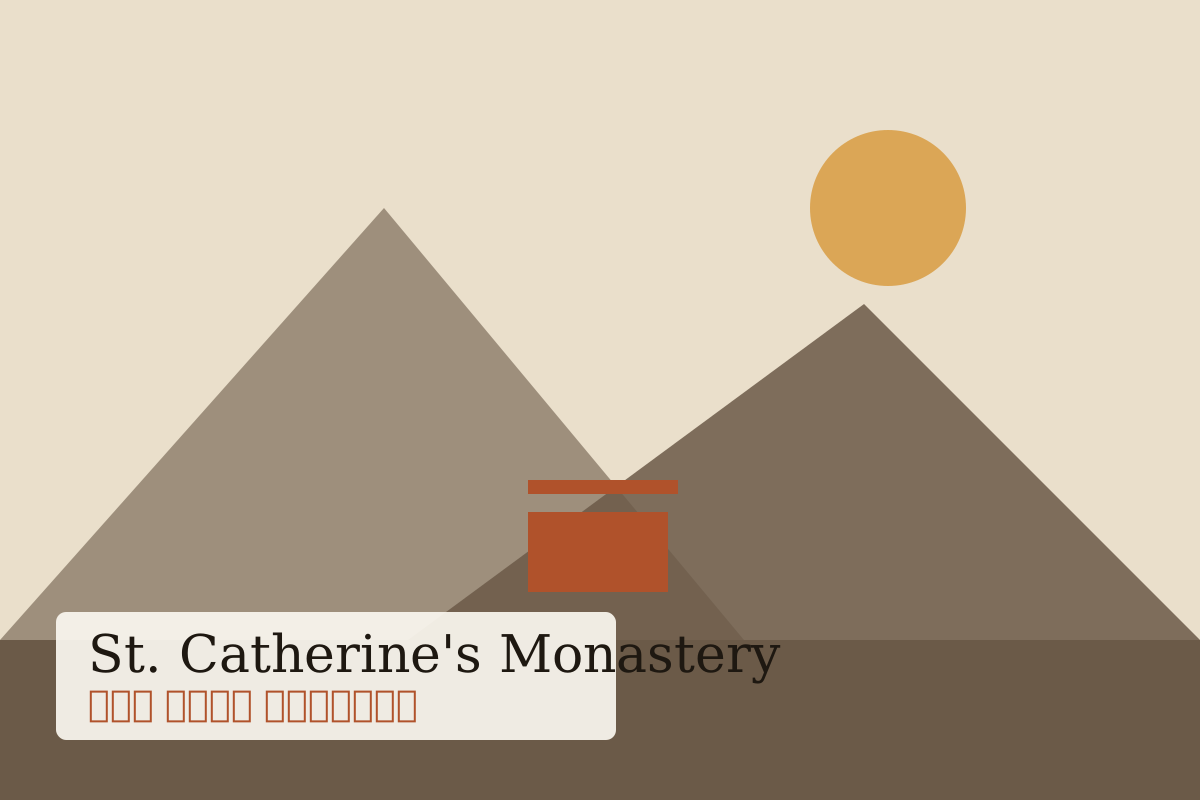
The road to St. Catherine's Monastery is one of the great drives in the Middle East. From Dahab it climbs out of the Red Sea coastal plain, through the Sinai mountains, past a series of hairpin bends to a pass at 1,600 metres, then drops sharply into a valley where the monastery sits in its fortress walls.
It takes three hours. It is paved almost the entire way. Almost nobody who is in Dahab for a beach holiday makes the drive, which is exactly why you should.
The fortress
Justinian's walls go around the monastery complex and they have been continuously repaired since the sixth century. You go through a gate and into an enclosure that contains a mosque, because the site has been shared between Muslims and Christians since the seventh century, which is rarer in Egypt than most visitors realise.
Inside are three churches, the oldest of them from the sixth century. The screen in the nave of the monastery church is one of the finest surviving pieces of carved wood in the Islamic world, in tamarisk and olive, with scenes of the Passion worked into the panels.
The library
The library holds thousands of manuscripts, the most famous being the oldest surviving Arabic Pentateuch and the Codex Sinaiticus, one of the oldest complete copies of the Bible in the world. Access is restricted and the light is bad, so plan for ten minutes and accept that you will not see much.
The drive home, or the walk
If you have the energy, ask at the gate about the walk up Mount Catherine. It is 2,642 metres, about two hours up and down with a guide, and the summit is a flat plateau with a small monastery and the most complete view of the Sinai peninsula you will ever get.
If you do not, drive back down and stop at the springs in the valley — Ain el-Fara, Ain al-Jinjar — where the Bedouin have planted a garden in a wadi that would otherwise be completely dry.
The rules
This is still a working monastery. Cover shoulders and knees. Do not photograph inside the churches or the library. Do not fly a drone. The guard at the gate is not being difficult; he is doing a job that has been done here continuously since the sixth century, and the shortest conversation with him is the one that keeps it that way.